

Put It On the Text
In memory of Tina Packer
January 10, 2026
Sometime in the last ten years I had a dream. In this dream, Tina Packer met me at the edge of a large empty stone room. She was waiting for me, smiling and silent. I said to her, “I want to help you. Tell me how I can be a part of what you do.” She just smiled and took my hand. “Come with me,” she said. “Let me show you.”
Effortlessly, she lifted off into the air and took me with her. “I can’t fly,” I said. “You can,” she responded. Suppressing my panic, I followed her into the air clutching tightly to her hand, afraid I would fall to my death.
“Look,” she said, pointing down to the view expanding below… an enormous castle unfolded below me with ramparts and balconies and turrets and courtyards and rooms and rooms and rooms. We flew higher and the landscape expanded further… parkland of trees and gardens stretching out into rolling hills and lakes and mountains as far as the eye could see.
“This is my vision,” she said to me over her shoulder, her face cracked open in a joyful smile. “Isn’t it fun?”
I woke up.
At the time I thought she was showing me her vision for the theatre company she cofounded, and all of the things it might do, the vistas it might open up for all the people who passed through its doors, sat in its seats, acted on its stages, and learned from its teachers. But now I think it might have been bigger than that, bigger even than what she thought she envisioned.
Tina Packer died last night. I was preparing to start teaching a Shakespeare Intensive at the Brooklyn Center for Theatre Research when I got the news. My first feeling was loss… of this giant who has contributed so much to the larger theatre community, to the practice of Shakespeare, to the work that contributed so much to my training. My second feeling was an overwhelming rush of gratitude… for the exact same things.
We are so lucky. Those of us who get to put our experience on text. In particular, those of us who practice Shakespeare, who have language robust enough to hold the depth and breadth of human experience (I learned that from Kevin G. Coleman). And now I realize that this expanse of language is the larger landscape that Tina envisioned all those years ago, and that I saw in my flying dream of her. Language, I continue to learn from Tina, is both the vehicle and the destination. There’s no such thing as an unimportant word. Language matters.
“Put it on the text,” I heard her and others say so many times in my training and work at that company. Whatever bubbled up, whatever threatened to hijack our emotions or thought or movement, we actors were told to “put it on the text.” It’s all in service of the language, which is in service of the human experience. Language, specifically Shakespeare’s language, illuminates what it means to be human, as Kevin Coleman says so elegantly.
And we, the actors, are the shepherds, the priests, the ministers of language. Not so much gatekeepers as guardians, not so much rule-keepers as caretakers. Tina’s reverence for language, like Shakespeare’s, changes everything. It turns a theater company into a temple of the human experience. If humanity is the mystery, language is the key to unlocking it.
Kevin taught me, “An actor is called to stand in the Fire so that the audience will know they can when they have to.” Tina gave us the firehose.
She taught us:
Language as code.
Language as unveiling.
Language as weapon.
Language as healer.
Language as agitator.
Language as solace.
Language as mirror.
Language as smoke screen.
Language as container.
Language as sanctuary.
Language as speed of thought.
Language as matter.
Language as meaning.
Language as power.
Language as lifeboat.
Language as feast.
Language as desperation.
Language as eucharist.
Words are spells; they call into being that which shimmers in the void of the divine imagination. To spell is to make a word. To make a word is to cast a spell, to create a world. The power to articulate well is not just aesthetically pleasing or poetic or lovely. It’s salvation. And it just may save us all.
We are so lucky. We get to practice. We have somewhere to put it.
Tina Packer was an actor, director, and the co-founder of Shakespeare & Company in Lenox, MA, and the author of numerous books, including Women of Will (Random House).
— Amy Michelle Gaither, January 10, 2026

Waiting for You.... I and You
“Missing me one place search another, I stop somewhere waiting for you… For every atom belonging to me as good belongs to you.”
— Walt Whitman
The world is full of stories about human beings letting each other down, of hurt and betrayal, the misuse of power, and the failure to protect each other. But it is also full of stories about people looking out for each other, trying to learn the mysteries of the Other, genuine compassion, generosity, and curiosity for humanity and for the individual, and the willingness to fight for each other—rather than against each other. This is one of those stories. I hope it leaves you with as much hope and joy as I have had directing it. We really do need each other.
— Amy Gaither
“This is what you shall do: love the earth and sun and the animals, despise riches, give alms to every one that asks, stand up for the stupid and crazy, devote your income and labour to others, hate tyrants, argue not concerning God, have patience and indulgence towards the people, take off your hat to nothing known or unknown, or to any man or number of men, go freely with powerful uneducated persons, and with the young, and with the mothers of families, read these leaves in the open air every season of every year of your life, re-examine all you have been told at school, or church, or in any book, dismiss whatever insults your own soul; and your very flesh shall be a great poem, and have the richest fluency, not only in its words, but in the silent lines of its lips and face, and between the lashes of your eyes, and in every motion and joint of your body.”
— from the prologue of Leaves of Grass

Every Story Is A Love Story
THE MOUSETRAP (2022)
Every story is a love story. Agatha Christie knew that better than anyone. She knew that we can’t have a mystery without traumatic memory, and that there is no trauma without love. Some might say that there is no love without trauma. The stories represented here all involve love, childhood trauma, and the need for closure in the reconciliation of that trauma.
After the Bible and Shakespeare, Christie is the most widely published and translated author in history. In a male-dominated world, she became famous for her writing in her own time, publishing some 102 books and 27 plays across two world wars between 1920 and her death in 1976, and inventing some of the most famous characters in all of literature.
This play, The Mousetrap (named after the play within a play in Hamlet), was written and produced in London, in 1952. It’s been running in the West End ever since. Seventy years. The longest running play in theatre history.
Christie experienced her own trauma and love and healing in her long life, and wrote stories that reflected them. While she is famous for elevating the crime and detective story to its own literary genre, it is her understanding of human nature and relationships that secures her unrivaled place in our hearts.
It is with great pleasure that we share this story of human connection, loss, love, and mystery with you, in the hopes that you will solve your own mysteries.
- Amy Gaither Hayes, Director
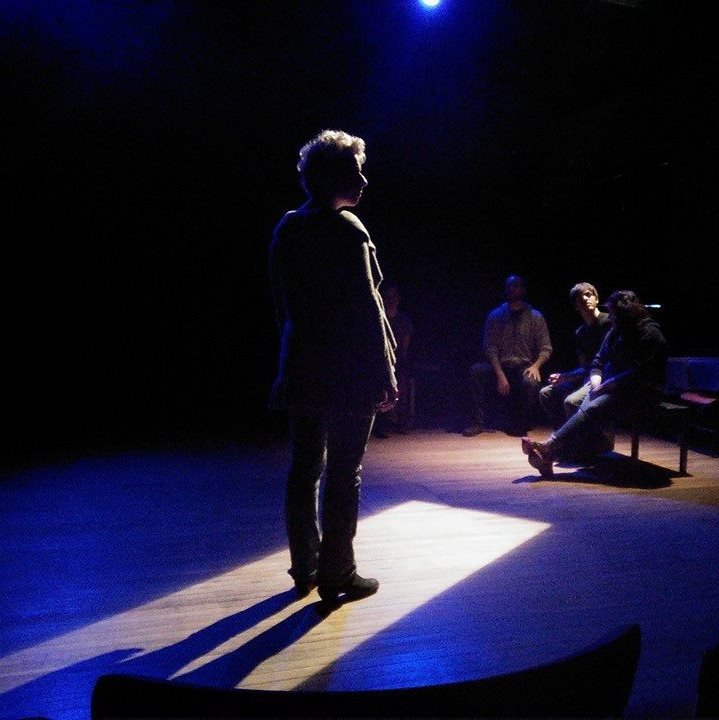
Why Women Like Shakespeare
THE WINTER’S TALE (2014)
I've always thought of King Lear as a father's play and The Winter's Tale as a mother's play. Of course, they are both more than either of these. These late plays of Shakespeare's (Cymbeline, Pericles, The Winter's Tale, The Tempest) used to be referred to as the Problem Plays, presumably because they don't fit neatly into the categories of Comedy, Tragedy, or History. Ironically, neither do our lives.
Now, they are often categorized as Romances. But I recently heard them referred to as Fairy Tales. I like that. In each, there is a father who is broken, and a daughter and/or wife, sometimes one who was thought lost, who appears and through magic or love or song or all of these, heals the father. It makes sense.
Shakespeare wrote these plays towards the end of his life, when he was back home in Stratford after a long career in London as an actor and writer. His daughter Judith was the only child still living at home (Susannah, his eldest, had married and left home, and Hamnet, Judith's twin, had died at the age of 11). Both father and daughter (and presumably wife) knew loss and grief. They must have bonded. By this point in his life, Shakespeare must have known great love and great passion and great hilarity and great suffering. He certainly wrote all of these into his plays and poems.
The Winter's Tale has always been a siren song to me. I am drawn to its mystery, its studied carelessness with details of time and place and realism. I love that it's a family story: how we hurt most the ones we love, and what forgiveness and redemption look like. I love that it raises issues of guilt and faithfulness and mercy and grace.
Like Joss Whedon, though, I am a little tired of the idea that Shakespeare or anyone seems concerned with Portraying Strong Women. I am a wife and mother and lover and artist and philosopher and woman who struggles with issues of faith and love and integrity, and I see myself reflected in every character, every turn of the plot. In short, I am human.
If ever Shakespeare was exploring what it means to be human in human relationships with other humans, it's in these final Fairy Tales. After all, aren't Fairy Tales where we find the truth about ourselves? They play fast and loose with fact and reality to get to truth and possibility.
No wonder female actors love acting Shakespeare. We get to be every bit as human as the men. We really are all in this together.
"It is requi'rd you do awake your faith."- The Winter's Tale
—Amy Gaither Hayes, Director (With a great debt to Kevin G. Coleman and Tina Packer)

What's So Dangerous About Stories? (and other Pitfalls of Truth)
JASON AND (MEDEA) (2015)
Someone once said there is really only one Story, and we just keep telling it in different ways.
I guess that's why these old stories (or new old stories, in the case of Jason and (Medea)) keep our interest. Why we still need them. Why they tantalize and amuse and frustrate and teach and tease us and turn us on.
A wise woman of the theatre told me that the words Theatre, Theology, and Therapy all have the same root: Theology is the study of God. Therapy is the healing of God. And Theatre is where God Comes Down. All the best therapy practices come from theatre, which goes with theology. Although which comes from which, I'm not sure.
A few years ago I went to Greece to visit all the major remaining amphitheaters. We saw Epidurus and Delphi and several others I never studied in Introduction to Theatre all those years ago.
And here's the thing: There's no such thing as a theatro (theatre) without an accompanying temple. Stories and Worship went together. Inseparable. And in the case of Delphi and some other theatros, they were also centers of healing, complete with hospitals and dormitories (literally, places for sleeping so your healer could help you interpret your dreams, which were markers of mental health).
Story. Worship. Healing.
In our play, Medea asks, "What's so dangerous about stories?" and her mother answers, "They make reality feel prettier than it is."
But I think it's because, as Madeleine L'Engle said, story is truer than fact. And Truth changes us. Truth can set us free. And freedom… Well, that leads to all sorts of possibilities that most of us are nowhere near ready for.
I've always found God in the Theatre. To me it's a sacred place. Holy. And as I stood looking at those crumbling vestiges of truth and story and worship and humanity, I saw why. Here we come face to face with ourselves, our humanity. Our fumbling needs and retching grief and raging lust and ecstatic love and ridiculous hilarity.
We are in the Holy Place. This is where God Comes Down.
- Amy Gaither Hayes (with gratitude to Tina Packer)

Art Is a Love Story
IMPRESSIONISM (2016)
This play is a love story. Absolutely, no question.
But it’s not just about love between two people. I think it’s actually about the love that great art creates.
Every time I see Michaelangelo’s David I cry. I can’t help it. I’ve seen it three times, and every time I have a visceral reaction, like a kick in the gut. Who knows why I cry. The power of him, his humanity, his beauty, the fact that a human being was able to make something like that… I don’t know.
I’ve had similar reactions to other works of art…. DaVinci’s cartoons… Seeing the Royal Shakespeare Company do As You Like It… Hearing Brahm’s Requiem on NPR late one night driving through the rain… Watching the Putnam County high school kids do a Shakespeare play…. Seeing the Joffrey Ballet dance to the music of Phillip Glass…. Walking into the Great Hall at DePauw University where I teach to get a cup of coffee and stumbling upon heaven: our Chamber Choir singing a cappella a piece by John of Portugal from the 14th century I’d never heard before… A tiny, unknown painting by an unknown artist in the National Gallery in DC that I was never able to find again, although I’ve searched: a woman sits in a chair sewing while a little girl crawls on the floor at her mother’s feet, lost in her own adventures…. The light slants into the room in such a way that I know it’s late afternoon and catches the bow on the little girl’s dress, a brilliant coral. The color made me laugh out loud with joy.
Who can explain these things?
I don’t mind theatre that makes me think, but if it doesn’t move me, it’s wasted. When I would go to movies as a teenager I would say, “If this doesn’t make me laugh or make me cry I want my money back.”
I’m still that way. I want to feel something. Even if I don’t understand it at first.
In this play, Katherine says about the Impressionist painters: “This bunch of guys got together one day and decided that maybe life had more depth than what was hanging on the walls. Hey, you may be an illegitimate drunk-off-your-ass crazy bastard, but if you know that getting it accurate isn’t as important as getting somebody to feel something then you’re a genius. And they figured out that if you give what’s in front of you a little distance, you might understand what you’re looking at.”
I think the purpose of art, any art, is to help us see what we’re looking at, to feel what we’re thinking about, and to love the life we’re living. I hope this play does that for you.

Physics and Metaphysics
ARCADIA (2015)
I love this play. I love it because it explores and explodes our tenacious belief that the mind and the heart are separate, that science and art are incompatible, that time and space are neatly boxed and easily defined, that fact and truth are the same thing.
For Valentine, mathematics is art. For Bernard, poetry is ambition. For Thomasina, philosophy and physics are a child’s playground. But none of them can divorce their hearts from their cerebral passions, and passion works its own alchemy on all of us.
Bernard says, quoting the great Romantic poet Lord Byron in a debate about the value of science versus poetry: “If knowledge isn’t self-knowledge it isn’t doing much, mate. Is the universe expanding? Is it contracting? . . . I can expand my universe without you. ‘She walks in beauty, like the night of cloudless climes and starry skies, and all that’s best of dark and bright meet in her aspect and her eyes.’ There you are, he wrote it after coming home from a party. . . .”
Bernard knows, at least in this moment, that there is no difference between the universe expanding and falling in love. Physics becomes metaphysics, time is a fluid construct, and the human heart is the greatest scientific mystery of all.
I hope you enjoy the mystery as much as we do.